MILLY STRANGE
Writer/Interviewer: Aysha Swanson
Photography: Marcus Coblyn, Brendan Frost, Veronica Charmont

There’s a moment Milly Strange describes where singing stops being something you do politely. It’s not yelling, but it’s no longer contained. The voice shifts, the body reacts, and suddenly the song isn’t just being performed, it’s being felt. That moment, she says, became the final stamp on her debut album.
In Melbourne’s thriving indie scene, few debuts have felt as urgent, raw, and unmistakably personal as Milly Strange’s self-titled album. Across tracks born out of emotional necessity, Strange unpacks the psychological terrain of change with a lyrical honesty that feels both unguarded and immediately recognisable. Songs that simmer with pain can suddenly erupt into visceral, cathartic release, as if the act of performing them is itself a confrontation with the unsayable.
Strange doesn’t frame her songwriting around specific events so much as accumulated feeling. Grief, in her work, is rarely singular or cinematic. It’s collective. It belongs to friendships that faded, people who left, and those who were lost without warning. The album traces that ongoing presence, the way loss doesn’t disappear so much as change shape, surfacing unexpectedly in everyday moments.
Across tracks like Ghost, that disorientation becomes sonic. Chords feel slightly wrong-footed, melodies hover in uneasy spaces, and lyrics resist metaphor in favour of blunt immediacy. Strange has spoken about letting go of the urge to make grief poetic, recognising instead that it often shows up in the most unromantic settings, between routine and responsibility, before you’ve had time to brace yourself. Now, as she reflects on creating this deeply personal record, Milly opens up about the moments where melodies gave voice to what words alone couldn’t.
This is Milly Strange.

AYSHA: Firstly, congrats on your debut album, 'Milly Strange'. It’s such a beautiful piece of work — I’ve been listening to it non-stop. You’ve spoken about how so much of the album was born from confronting things you weren’t ready to face in real life. Was there a moment — a lyric or a melody, maybe — when you felt that a song had given voice to something you hadn’t been able to articulate before?
MILLY: Yeah, I think the last song on the album, ‘The Last Time,’ was actually the final track I wrote for it. A lot of the other songs are years old. It wasn’t planned, but when we played it with the band, I found myself really belting it out. Vocally, it shifts from a singing space into almost - well, not yelling - but another place entirely, and I can feel it physically. It’s really cathartic. That song ended up being a real stamp on the album - it felt like a definitive moment, like, ‘alright, this is it'.
AYSHA: Well my favorite track on the record has to be “The Last Time.” It captures a kind of lingering sorrow that isn’t easily resolved, that feeling that grief stays with you, it just becomes part of who you are. I was wondering what inspired this track and if maybe writing that song altered how you think about closure itself?
MILLY: I think it’s a really interesting thing to talk about, especially with these songs on the album, because they’re so emotionally deep for me - and I think other people have picked up on that. That particular song wasn’t about a specific moment or situation. I was singing to a collective sense of grief I’ve experienced in different parts of my life - old relationships, friendships, people who’ve passed.
I often think about that saying, you know, life is like a train ride: people get on, people get off. It’s easy to say, but the reality of never seeing someone again - whether they hurt you or you hurt them - is really difficult. That song became my way of expressing that feeling, of singing to that sense of loss and change
AYSHA: I feel like it’s also the idea of you actually sometimes don’t know that that is the last time you’ll see them.
MILLY: Absolutely. On reflection, the grief in that first album is really tied to a friend I lost in high school - one of my best mates. I didn’t even know it at the time. We literally crossed paths, and that was the last time I ever saw her. I hold on to that moment. When I sing those parts, that’s who I’m singing to. Not knowing when something ends like that is a powerful reminder to just be kind. To put your best foot forward, even when it’s hard. That song, that feeling - it serves that purpose for me.
AYSHA: On tracks like “Ghost,” you explore that surreal, disorienting state of grief where presence and absence blur, and memories feel almost physical. How do you translate that psychological space into sound?
MILLY: Yeah, I think when I was writing ‘Ghost,’ even the chords felt dissonant - they didn’t quite sound right. When I started playing it on guitar, I was cycling through similar themes I often return to when writing. In the past, I might have tried to be poetic, but in this song, I was just singing what was happening in my life in that moment.
It’s like those early-morning hours when it’s dark, you’re disoriented, you don’t know the time, and the stab of grief hasn’t hit you yet. You’re just waking up, out of it. That’s what I was singing to - the uncomfortable, in-between feelings you have to sit with. And the band, who are amazing, really captured that in the music. The song embodies that feeling; the lyrics and the sound really come together to translate it
I think, especially with a few songs I’ve written, I’ve really let go of the idea that everything has to be mysterious or poetic or this mind-blowing thought. In that song, it’s really simple: I don’t want to wake up. I think about my friend who’s gone all the time - she’s always here - and I’m just having to go catch the bus.
I used to have this beautiful, romantic idea of grief - like drinking a glass of wine in the rain, smoking a cigarette, candlelight. But really, it’s just you shaving your legs and having a breakdown. Sometimes it’s not romantic at all - that’s just how it is.
AYSHA: That’s very true. Especially with women, I feel like it’s always depicted so sensually, it’s the slow tear rolling, when in reality you are sitting on the floor in the shower.
Both Laugh
MILLY: Yeah, You got a cloth over your head, soaked everywhere. Like, you know, it’s being like, yeah. There’s something that I’ve come to respect that in my own songwriting instead of hating it, or thinking maybe I should read more books or something. I’m just like, "no, that’s how I feel".
AYSHA: You’ve spoken about being drawn to contrasts — light and dark, past and present, beauty and unease — both lyrically and sonically. How do you make decisions about when a song leans one way or the other?
MILLY: I definitely think it’s such an interesting thing, and especially with the new stuff I’m working on. I always get told, ‘Milly, write a happy song, like, goddamn.’ And I think some of them have a joy to them. But I think I… and hey, maybe things will change, you know, I’m very open to the idea of writing whatever I feel needs to happen.
But I do think there’s always a slight unease… or I wouldn’t say unease, like maybe… difficult things to feel in my songwriting, because I guess I do use it as a tool to sort of put those things to bed - well, they don’t sleep - but, you know, it’s a way of processing those things.
But there’s a few chirpy ones coming up, so I’m excited for those—they’re fun as well. And I wasn’t sure if I should roll with them. But that’s the light in the dark, isn’t it? I think that’s important to highlight.
And I never just want to do like one thing, you know, I want to do it all, do it all. Yeah. Feel it all
AYSHA: Yeah, of course. And, you know what? You did reach a target audience with the sad songs, so worry about it.
Both Laugh
MILLY: I sometimes, like, especially for this next album, the songs that really - people are like, ‘Oh God, I love that song’ - I’m think, oh my God, should I be doing this? Like, I don’t know if I should fuel this fire. But I think it’s… you know, the artists that have really moulded how I process things and how I want to, you know, connect with people musically, did that for me.
Like, listening to songs - especially a huge one is Angel Olsen. I read in an interview that every time she sings—I’m going to butcher this—but she sings like it’s her last day on earth, or, like, tomorrow’s not promised, all that kind of stuff. And I really was like, God, that’s why it hits you. It’s not even gut-wrenching, it’s just… living sounds.
And I think that’s what I want to give. Not that I’m bestowing some gift upon people, but it’s like, that’s all I can be: honest. And someone gets to feel something in a song that’s, like, insane to me and awesome. And that’s all I want to do, you know?
AYSHA: Yeah. No, I totally get that. I feel like you definitely do capture that — like with “The Last Time,” I feel like I haven’t heard a song that’s captured that exact feeling for myself. So I get what you mean. It’s not like giving someone something, but it’s allowing them to feel something.
MILLY: I really think about it in a sort of… not all the time, but in an almost therapeutic way. I’ve done a lot of therapy - I’ve done every therapy there is. But I find that having something that lets you feel things that might not be easy, or even accepted, is such a special thing. Music has been that tool for me - listening to music, playing music. So I feel like I’m walking through this journey always holding that close to me, like, that’s what I want to do. That’s what’s honest to me. And, you know, the right people will find it.
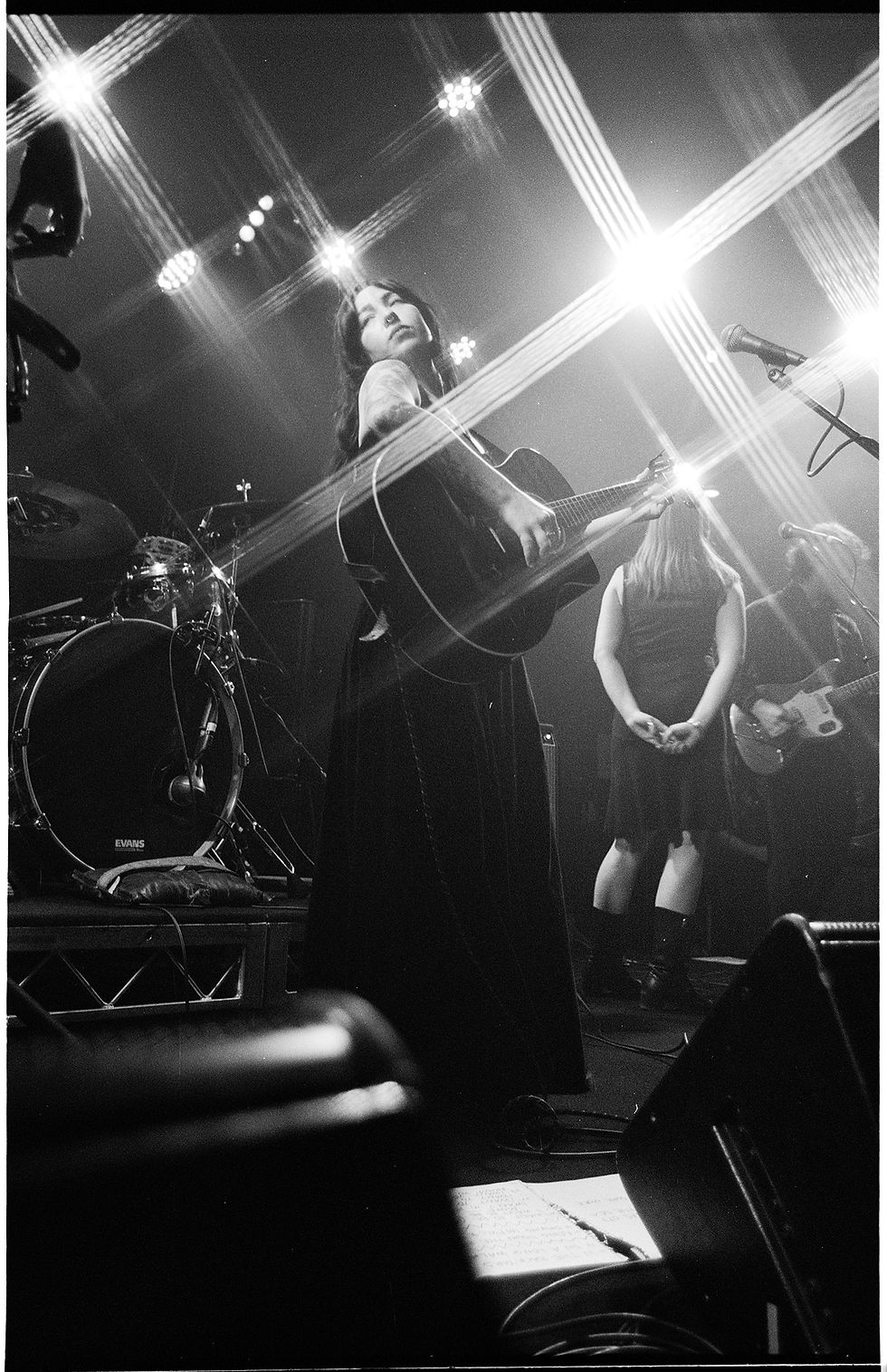
AYSHA: Your early musical influences, from Johnny Cash and Bowie to more contemporary storytellers like Angel Olsen and Sharon Van Etten, are so varied. How do these threads inform the sound-world of this album, both lyrically and sonically?
MILLY: Yeah, I think I really connect with music that I feel. And I’m sure that’s not a profound thing to say - that’s music, you know, everyone has that. But those darker storytellers, like Johnny Cash or Tom Waits, there’s a grittiness to them, and at a young age, I was like, I like that. I really loved that. And, you know, I loved pop music too - I was listening to Kanye West and Kendrick Lamar. That’s who I’m listening to - music that allows me to be in a space I want to be in.
But I definitely think when I was learning how to use my voice I really turned to artists that I felt used it in a similar way, like Angel Olsen, Sharon Van Etten. The way they wield their power - I was like, wait, maybe I can understand where that’s coming from, what they’re unlocking. I think they influenced me because I saw a little part of myself in them, maybe. I don’t know if that’s strange to say, but yeah.
I’m also influenced by a lot of people around me. I sort of take everything, and - my friend Charlie Ivan, we just did a show together, have been working on some stuff - and I had to be like, yeah, I’ve stolen some of your themes and I’ve weaved them into my songs. And he was like, I love that.
I also grew up in a household where there was always music playing. I think that really shaped me - my knowledge of artists, music history, reading music biographies - that was the thing I wanted to learn about. It all comes out in what I’m doing now with Milly Strange. It’s years of musical training, and now I’m using it - it has a purpose.
AYSHA: You sort of answered this but you have such a distinctive vocal presence — it feels immediately recognisable and emotionally specific. Were there particular singers or styles that shaped the way you use your voice, or did it develop more intuitively over time?
MILLY: Yeah. I love that question. I think for a really long time, I was really good at mimicking voices, and I wasn’t singing in a way that I truly identified with. I always wanted to sound perfect - hit every note, not wobble - and I thought, no, I want to sound perfect.
When I started writing my own songs - I mean, I’d been doing it for years - but the songs on the debut album weren’t written for an album or anything. That was just me in my room, living with my parents, writing how I was feeling because I was struggling. And it felt good. It felt nice to not feel like I was putting anything on. It felt different in my body and my voice.
Then something flipped, and I was like, oh, I just have to be me. Which can be scary, but… you know. I really stopped trying to constrict my voice and let it do what it wants to do. The vocal flipping is an example of just letting it loose, stopping the tension, and not trying to hit everything perfectly - just singing. And it feels really good.
It’s amazing what I’ve learned, especially playing with the band. Even when we’re trying a new song, the places my voice goes - I can’t do on my own. It’s only with the musical energy of the other people in the room that I hit notes I can’t believe, and I’m like, I don’t even know how that happened. But energetically, it brings something out of you.
Yeah, I feel lucky to be able to express those feelings through my voice. I feel it, exactly what I’m saying
AYSHA: The band dynamic on this record is so rich, from the grit of guitar textures to the visceral live feel. How do your bandmates influence the emotional shape of your songs from the demo stage to the finished product?
MILLY: I think - and I literally said this at band practice last night - I feel really at ease just being myself when we’re going through songs and working things out. A lot of what I try to do is come in with a song and say, ‘I kind of want it to feel like you’re in a destitute land. There’s a gas station with a light on, but no one’s there, and you have to go in and investigate.’
They’re very open to me giving them these strange scenarios to play to, and I’ll be like, no, not this. Yes, that. I like that. It’s odd, but being around people who are so up for that and create a safe space to feel what I need to feel - it’s really special.
And they’re all such talented musicians as well. They understand where I’m coming from. That’s really important to me - they play to the feeling, they play to the words. They’re not just reading music, which is fine, but I can see in each one of them pain and anguish. They get it, which I love.
Yeah, they’re awesome. They’re definitely an important part of the journey. Especially on that first album, they were a huge support system for all of that. I’m so grateful to be around musicians like that.
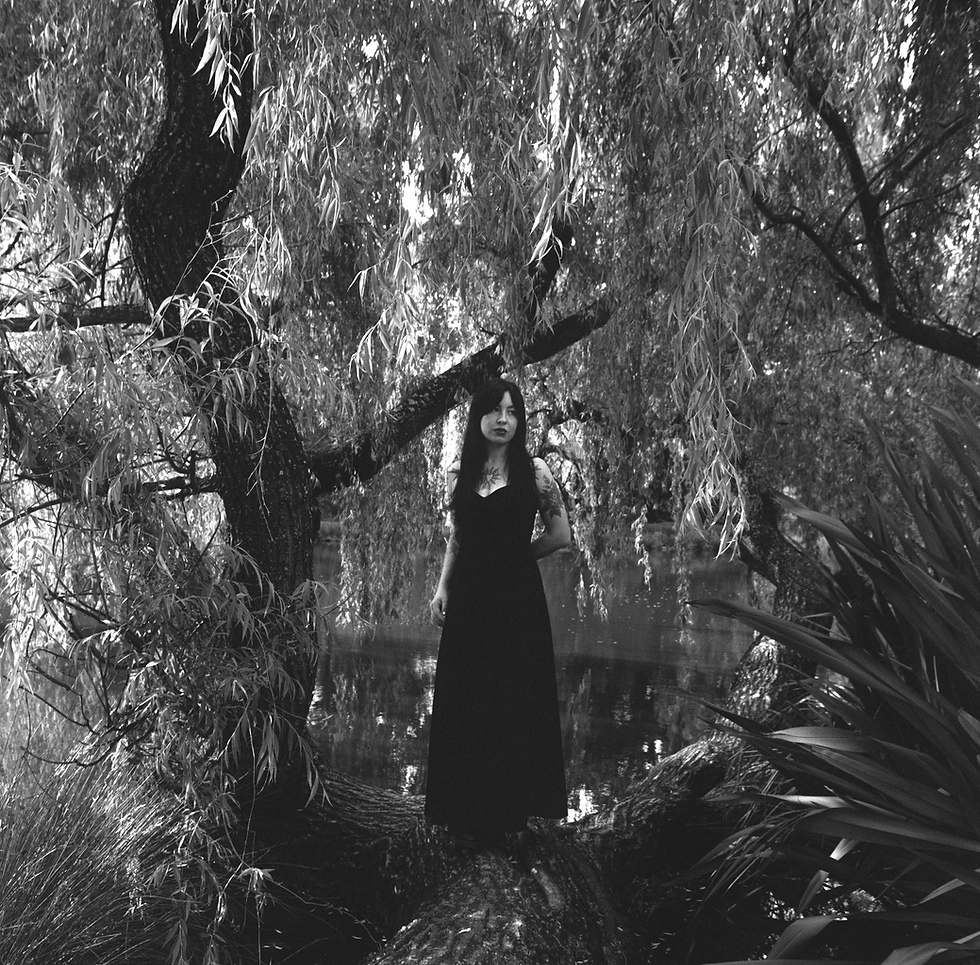
AYSHA: That’s beautiful. It’s so nice to feel like in a held space, especially to share vulnerable emotions like you do. On that thread of performing these songs live, the album comes across as deeply personal and vulnerable in its lyricism and delivery. Do you find that being on stage makes it easier to share that honesty, or does the vulnerability still feel fresh and raw every time you perform?
MILLY: I love that question as well. I think it’s so… it can change. It really can. I’ll have days where I’m having a hard day, and you can’t cancel shows when that happens. All I try to do is go out there and use that to tap into and feel things.
Other days, I’m feeling really happy, and I’m like, oh, I don’t want to sing about the sad stuff - I’m having a good time. But again, it’s about the energy of the band, the energy in the room, the people. I really love involving everyone.
That’s something I’ve had to get better at: oh, I don’t really feel like going there, but I’m going to go there. And it always feels great. It’s electric afterwards. You feel amazing, so connected to everyone in the room and your band. It’s such a beautiful, unified thing.
I do think about the future - touring, doing a set five times in a row - and wonder if that will change the way I show up, the way I sing, the way I am on stage. But yeah, I try to always show up in a really honest way. That’s the one thing.
AYSHA: Yeah, I can imagine that’s very therapeutic as well, to have that space with so many people. But also draining if you’re doing it constantly.
MILLY: It’s… I don’t know. I haven’t really gotten to that road yet. But I’m very much about one thing: be honest, don’t shy away, be real.
I also really look at people when I’m singing. I’m not staring at a faraway object or a TV in the background - I’m looking at everyone in the crowd because I want to see you. That’s as much for them as it is for me. When I’m performing, it’s not one-sided - it’s a two-way street. I’m opening up, and they’re opening up.
To me, the crowd is like a mirror on stage. That’s how I see it. We are one tonight.
AYSHA: Finally, I love to platform female and gender-nonconforming artists. You’ve built your project very much on your own terms. What advice would you give to women and non-binary artists trying to carve out space in scenes that can still feel male-dominated?
MILLY: Yeah. So I’ve definitely felt the perils of that. I would say number one - and this is a hard one - is having a really great musical support system. That means, you know, going to events or shows of bands you like with non-men and making connections there. I’ve made most of my friends just by going up after a show and saying, ‘Hi, I’m Milly. I loved that, I love your music’ - just putting myself in positions to be open to those relationships. It’s great to be seen and heard by people who understand where you’re coming from. Yeah a big one is the people you surround yourself with.
I would say this is a hard one too: don’t just do things because someone tells you to. You really have to tap into what feels right for you. What do I want to do? What’s right for me? A lot of people, especially men, are going to give unsolicited advice. I’ve learned to just let it roll off, water off a duck’s back. I don’t need that. Thank you. Goodbye. Just try not to fixate on those things and be true to yourself.
I feel very lucky with the connections I’ve made. The music, for me, has been about surrounding myself with community. I’m in that community. I’ve curated it, shut out the stuff I don’t want, and created that space you were mentioning before, where you approach non-male artists, interact with them, and build those connections.
I love the community, I love the people who connect with my music. I’m like, ‘Fuck, you’re awesome.’ That comes from being myself and not trying to be anything else. The people who see that and identify with it bring themselves into my orbit, and I’m in theirs. It comes from backing yourself and being true to what’s important to you - in music, art, and all of life. Oh God, I go on… but it’s so real to me. I just try to show up and be who I am, and all the right people come in and out.
AYSHA: I appreciate it. It’s great advice. I do appreciate you sharing that.
FIND MILLY STRANGE HERE


I recognize the article’s disciplined analytical register. Observations remain grounded. Additional thematic background tied to the topic may be found on the website . Online entertainment platforms contextualize adoption variability.